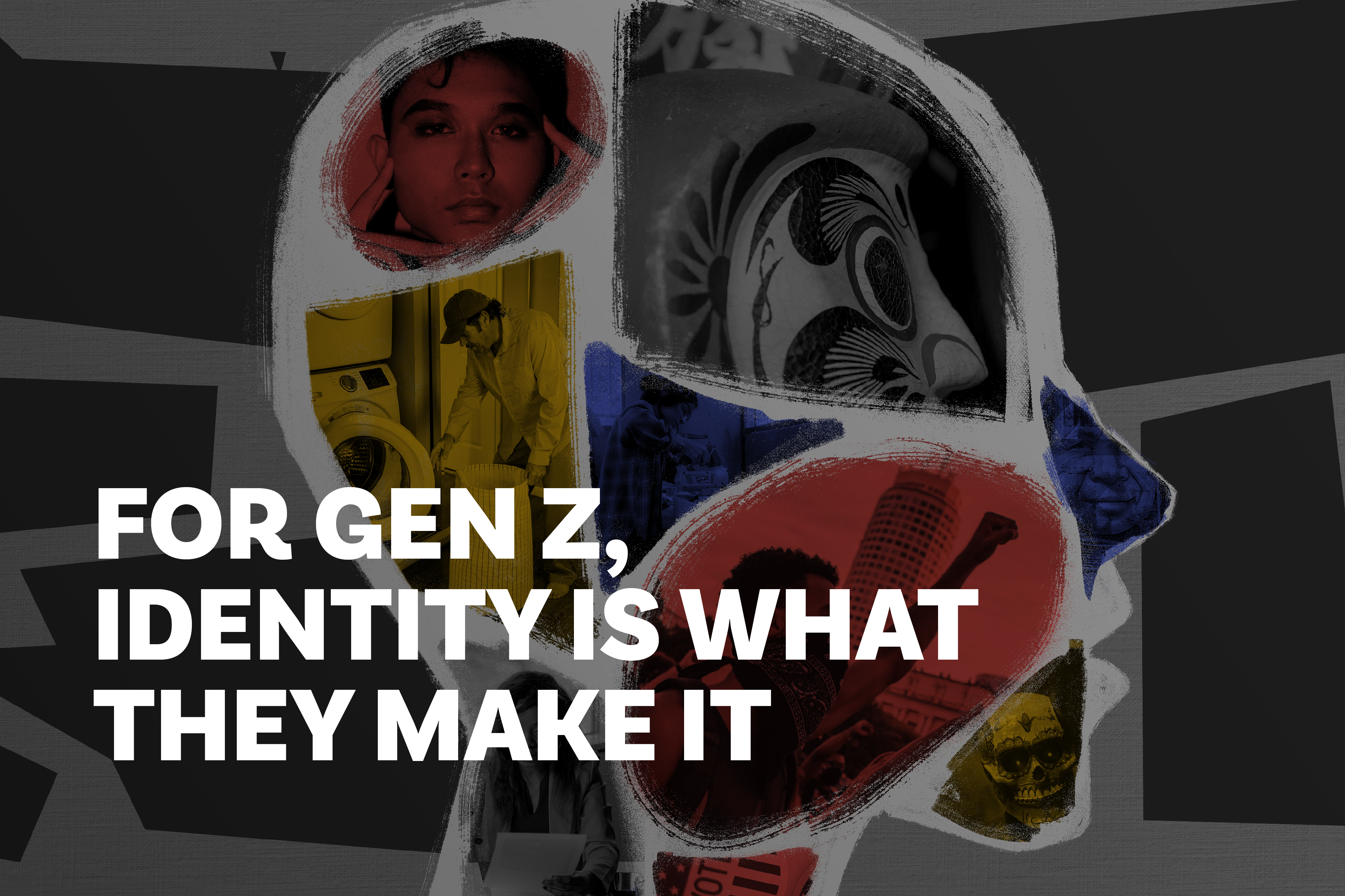
Gen Z is made up of pre-teens, teens, and young adults born between 1997 and 2012, and what makes this generation unique is its position as the most diverse ever in terms of race, ethnicity, and gender. Based on the latest US Census, those under 18 are nearly two times more likely to identify as two or more races, and Gen Z will likely be the last generation that is predominantly white. Many Gen Z-ers grew up with President Obama in office and bore witness to historical events like the legalization of same-sex marriage. For them, the concept of identity is not straightforward; not only do Gen Z-ers accept and embrace their own differences, but what makes others different, too. Vox Media partnered with Horowitz Research on a survey of 800 Gen Z-ers ages 14-24 to understand how the intersection of race, ethnicity, sexuality, gender, and other variables affect their perception of identity, the role media plays in shaping their points of view, and what it takes to build brand trust among this highly informed and connected audience. Gen Z-ers recognize how powerful media can be in driving acceptance, but feel there is room to improve within the advertising industry. Media and brands are being held accountable for shaping the way society thinks about gender, sexuality, and race, and they’re responsible for creating an environment that promotes inclusivity — but it must be done via an honest dialogue about brand ethos that’s backed up with real policy, practice, and people. In many ways, there are parallels between the way Gen Z thinks about their own personal identity and a brand’s identity. According to a 2021 Bloomberg article, Gen Z has a disposable income of $360 billion, but their approach to spending is nothing like what we’ve seen from previous generations. It’s essential for marketers to understand this complex and intersectional generation as they step into their own and hone their spending power. Knowing Gen Z continues to prioritize both self-expression and conscious consumerism, our learnings will provide a guide for brands to build meaningful relationships with young consumers and outperform competitive brands whose messaging feels forced, crafted, off-brand, or who are more narrow-minded and binary-oriented in their targeting. According to Gen Z, marketers should recognize that: Labels should be chosen, not given, with identities being built based on a collection of intersectional attributes. Gen Z rejects the constraints society has previously placed upon gender binaries and gender roles and places less judgment on the identities other people choose for themselves. Media is responsible for promoting awareness and driving Gen Z down the “acceptance funnel” with acceptance as the basis for inclusion. Gen Z’s personal and intersectional approach to identity means wider representation and diversity on screen is critical. Brands have a responsibility in shaping thinking about racial and cultural diversity. Gen Z-ers are proud to be conscious consumers, which means they make deliberate purchase decisions to support brands they perceive as having a positive impact. Creative messaging that spotlights social values that are not intrinsically and authentically connected to a brand’s identity, actions, and policies will be rejected. Media publishers that have developed genuine bonds with Gen Z are the ideal partners for consumer brands, offering an opportunity to both be seen and heard and to build brand trust and authority. LABELS SHOULD BE CHOSEN, NOT GIVEN, AND THEY INTERSECT TO FORM UNIQUE PERSONAL IDENTITIES Gen Z self-identifies based on a collection of intersectional attributes and describes society’s labeling as much more siloed. Gen Z believes society assigns labels by characteristics such as gender, race, and physical characteristics, while Gen Z-ers identify themselves first and foremost based on their personality traits, hobbies, interests, and passions. In general, 66% of Gen Z-ers say society assigns labels based on demographic characteristics, while 81% would prefer to be defined by more personal attributes like personality traits or hobbies. Gen Z-ers’ preference for a more personal construction of identity underscores the normalization of an intersectional and multi-faceted approach to identity. There is a shift from being told who you are to wanting to be asked who you are, with two in five saying that labels should be assigned by the individual, not society. This shift towards self-identification has implications for marketers. Rather than targeting consumers based on rigid demographics (e.g., gender, age, etc.), Gen Z expects marketers to consider passion points and communities, which will certainly have an impact on brand messaging, imagery, language, etc. Taking affinities into account before demographics will allow for a more inclusive, dynamic conversation. GEN Z REJECTS THE CONSTRAINTS SOCIETY HAS PREVIOUSLY PLACED UPON GENDER & GENDER ROLES 44% of Gen Z believe gender is not a binary, compared to 34% who say gender is binary. The majority of Gen Z-ers are less attached to labeling historically gendered activities as “appropriate” for only one gender. There is an expectation that, regardless of identity, everyone can do the same things, shifting concepts of who can be strong, empowered, overtly sexual, emotional, nurturing, and vulnerable. For example, six in ten Gen Z-ers feel that using makeup or wearing dresses is OK for both men and women. This contrasts with Gen Z-ers’ perceptions of what is most often accepted by society. MEDIA PLAYS AN ACTIVE ROLE IN PROMOTING AWARENESS AND DRIVING GEN Z DOWN THE ACCEPTANCE FUNNEL Media — especially social media — has become a catalyst for unprecedented conversations on identity, diversity, and inclusion for this generation. Six in ten Gen Z-ers believe that the media has had a big influence on the way they think about gender identities and sexuality. Content from media publishers has encouraged awareness and exploration and led to acceptance and advocacy. Over 50% of Gen Z-ers recognize that media promotes acceptance, which is important as acceptance is ultimately the foundation for inclusion. This proves how powerful media can be in propelling society forward and promoting allyship. Aside from talking with friends, social media has had the biggest positive influence on views of gender and sexuality among