
Polygon partners with ReedPOP for New York Comic Con x MCM Comic Con’s Metaverse, Oct. 8-11
As an official media partner, Polygon will bring programming that celebrates the diverse communities, weird fandoms, popular franchises, and undiscovered talent that shape pop culture

Why Supporting Local Journalism Is Good For Business
We need local news more than ever. The value of trusted local journalism has never been more clear: as trust in government erodes, it is independent reporting that provides the necessary oversight and illumination to inform the public and hold policymakers accountable — local newspapers are responsible for half of the country’s original reporting despite only accounting for 25% of the media outlets. In times of crisis, we rely on trusted information from local outlets to stay safe and informed. During the COVID-19 pandemic, local publishers have seen a significant boost in readership as information about community response has become essential; many have even dropped their paywalls in service of delivering vital information at the expense of short-term revenue gains. Despite this surge in value and readership, many local publishers find themselves on the brink of collapse. This year, local advertising revenue could drop as much as 25%, perpetuating and accelerating a crisis that’s been building for years. For vulnerable local publishers already facing an uphill battle, it could spell doom. To help prevent more news deserts from popping up throughout the country, local publishers need the support of the nation’s biggest advertisers. These high stakes present an opportunity to better understand the connection that local news fosters between audiences and their communities, and whether that same connection can translate to untapped opportunity for national advertisers. We know that supporting local news is good for our world and society, but is it also better at driving business outcomes for advertisers? Vox Media partnered with the global research firm Nielsen to test this theory. Here’s what we learned: Local news helps build incremental audiences In our study, we found that 38% of local news site visitors do not visit any national news sites — meaning a large audience is not being
Why the trusted personal connection of podcasting make the medium a meaningful channel for any marketer
Audiences are looking to podcasts for content they can’t get anywhere else
New podcast from Ben & Jerry’s, Vox Creative and The Who We Are Project examines the lesser-known history of racism in America
Introducing “Who We Are: A Chronicle of Racism In America” from the Vox Media Podcast Network

Critically Acclaimed Video Creators Launch New SB Nation Community: Secret Base
The new community pairs the storytellers behind acclaimed programming including “Dorktown,” “Beef History,” and Jon Bois’s ASME-winning “17776” with an interactive community platform at sbnation.com/secret-base

A new project from The Verge chronicles what it’s like to both actively witness and be subjected to state violence
Q&A with Bijan Stephen, Reporter, and Mariya Abdulkaf, Video Producer, outlines how “Capturing the Police” was developed
Vox Creative and KitchenAid debut ‘A Woman’s Place’ on Hulu
Academy Award-winning Director Rayka Zehtabchi, Ventureland, Vox Creative and Digitas Launch Kitchen Appliance Leader’s Initiative to Combat Gender Inequality in the Culinary Industry
VOX AND OMIDYAR NETWORK ANNOUNCE THE LAUNCH OF “THE GREAT REBUILD”
“The great rebuild,” launching today with a series on The Ezra Klein Show, explores what it will take to rebuild—and transform—America’s economy amid the COVID-19 pandemic

Hulu Announces Two New Originals as Part of Ongoing Deal with Vox Media Studios and David Chang’s Majordomo Media
“Eater’s Guide To The World” Debuts on November 11 with Emmy® Nominated Actress Maya Rudolph To Narrate Straight-to-Series Order for Docuseries “The Next Thing You Eat” from James Beard Award-Winning Chef David Chang and Academy Award® Winning Documentary Filmmaker Morgan Neville Emmy® nominated actress Maya Rudolph will narrate the upcoming original Hulu series “Eater’s Guide To The World,” premiering November 11. The series, developed by Eater and Vox Media Studios, explores some of the most satisfying culinary destinations around the world including the Pacific Northwest, Casablanca, Tijuana and Costa Rica. Leveraging Eater’s in-depth knowledge of food around the world with its dedicated global network of journalists and contributors, “Eater’s Guide To The World” offers the award-winning network’s unique insight into local food communities and a broad, inclusive perspective on the experiences and people shaping food culture today. Lauren Cynamon, Chad Mumm, Mark W. Olsen and Amanda Kludt serve as executive producers and the series is produced by Eater and Vox Media Studios. From the Emmy® nominated creators of Ugly Delicious—James Beard Award winning chef David Chang and Academy Award® winning documentary filmmaker Morgan Neville—“The Next Thing You Eat” is a six-episode docuseries that explores the seismic changes happening all around us and how they affect not only the restaurant world but people’s fundamental relationship to food. Chang and a diverse cast of correspondents will take an unflinching look at the challenges and opportunities ahead, including how our food is grown, who cooks it, how we pay for it, and whether or not deliciousness will fall by the wayside. “The Next Thing You Eat” is produced by Tremolo Productions and Majordomo Media for Vox Media Studios—executive producers include David Chang, Christopher Chen, David O’Connor and Chris Ying on behalf of Majordomo Media, Morgan Neville and Caitrin Rogers on behalf of Tremolo
The Cut Returns to Audio with a New Weekly Podcast
Avery Trufelman to host and B.A. Parker to produce

Vox Joins Pulitzer Center, Diversify Photo for Eyewitness Photojournalism Grant
The Pulitzer Center and Diversify Photo are thrilled to announce a new collaboration with Vox for the Eyewitness Photojournalism Grant, as well as an extension of the grant deadline to August 7, 2020. The Eyewitness Grant supports underreported stories told by freelance photojournalists historically underrepresented in the American press. Now, as part of this program, one of the grant finalists will have the opportunity to work with the Vox editorial team to develop and publish a story along with their visual series. We encourage photographers to continue seeking commitment from outlets to publish their work, but we hope this partnership with Vox will open doors for photographers still seeking a distribution plan to apply for the grant. During the judging process, Diversify Photo, the Pulitzer Center editorial team, and the Eyewitness jury will work with the Vox team to identify a recipient whose story will be published on the site. “The American news media is a relationship-based industry and too often, this means audiences miss out on great stories from journalists without access to editors,” said Andrea Wise and Brent Lewis, co-founders of Diversify Photo. “We’re thrilled to be partnering with such a conscientious and forward-thinking media outlet to ensure the stories we fund find an audience, regardless of applicants’ prior relationships with editors.” “Vox exists to empower its readers through journalism that explains the ideas and issues shaping our country and the wider world beyond,” said Kainaz Amaria, Visuals Editor, Vox. “We are grateful to be able to partner with the Pulitzer Center and Diversify Photo, and look forward to working with one of the talented photographers—leveraging our platform to publish their work.” “The Pulitzer Center is thrilled to welcome Vox as a partner in the Eyewitness Photojournalism Grant,” said Marina Walker Guevara, the Center’s executive editor. “We need the leadership of news organizations like Vox to give visibility to the stories of journalists of color who historically have been
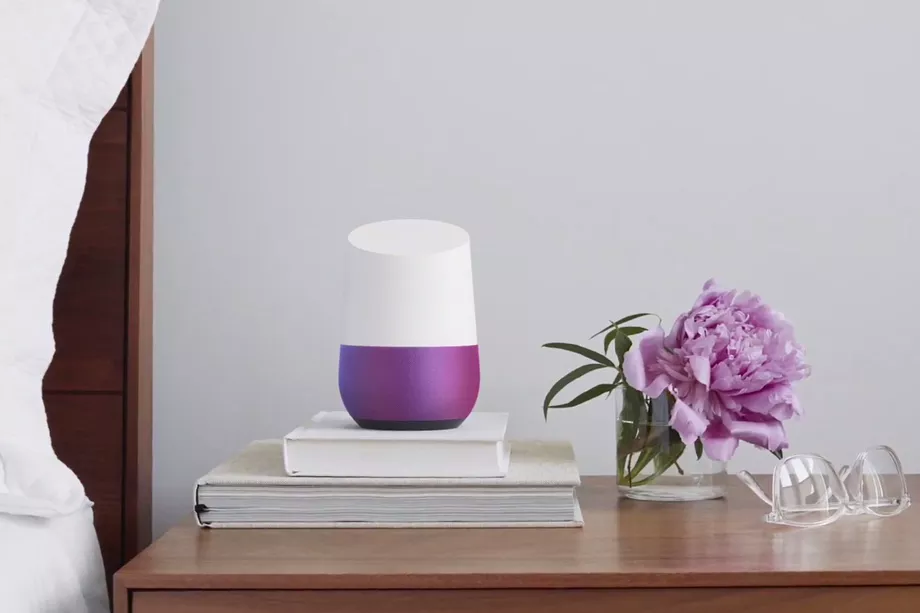
Vox launches a portfolio of custom premium audio content on Google Assistant
As part of the Your News Update audio news briefing, audiences can tune into custom produced audio segments from Vox’s daily news podcast, Today, Explained on Google Assistant-enabled devices in the US today, with more content from Vox to premiere next month
Vox Creative and Ad Council remind us not to drive while high in the brand studio’s thrilling first-ever TV spot
Today, in partnership with Ad Council and the National Highway Traffic Safety Administration (NHTSA), Vox Media’s award-winning branded content studio, Vox Creative has released its first-ever TV spot, in a thrilling, horror-esque spot reminding everyone not to drive after smoking marijuana. What had originally started as a partnership between Ad Council, NHTSA and Vox Creative to create a campaign to run across Vox Media’s platforms, quickly evolved to a larger scope, for the spot to run across broadcast TV as the team at Vox Creative shared the idea for the spot itself: to create a thriller-like film reminding everyone it is illegal to drive high – even if you are being chased by a masked man with an axe. In the spot, directed by the award-winning Vincent Peone, we see two guys running for their lives, sprinting from a lurking masked man wiedling nothing but an axe. As the two guys find their truck and turn the ignition on, they remember it’s illegal to drive high. As they switch seats to safely and responsibly flee from the scene, a song plays reminding everyone not to drive high. It’s an original song, created in collaboration with Vox Creative and production company, Artclass and was written, performed and produced by Daniel Grimsland. As part of the fully integrated campaign, in addition to the 30-second TV spot running on broadcast in the coming weeks, the brand studio also created an upcoming custom 30-second radio spot. A 80-second version of the film will run via branded content on Vox.com – as well as distributed via Vox Media’s proprietary ad marketplace, Concert. Vox Creative also created movie posters for the spot, with fake reviews to promote the campaign on social, as well as :15 social cuts that will run on Instagram, Facebook and Twitter. Creative Credits
Vox Launches a New Limited Series, Future Perfect: The Way Through — A Podcast from the Vox Media Podcast Network
Subscribe to Future Perfect: The Way Through — a new podcast series on philosophical teachings and faith traditions from around the world — hosted by Vox’s Sean Illing and Sigal Samuel

Award-winning Pivot Podcast Launches Virtual Event Series Schooled
Hosted by Pivot’s Kara Swisher and Scott Galloway, each event in the five-part series will zero in on one way the pandemic is accelerating industry trends.
Vox and The Center for Public Integrity Announce the Launch of “System Failure”
The six-month collaborative project will explore the Trump administration’s regulatory rollbacks and budget cuts, and their impact on public health.

Quibi and Vox Media Studios Announce Mari Takahashi is Joining SPEEDRUN by Polygon As Correspondent
Each week, the gaming content creator and entrepreneur will join Mondal in exploring the diverse communities that make up gaming culture.

Insights & Innovation: Vox Media research shows its audiences’ perspective on the Black Lives Matter movement
America is going through an unprecedented time: a pandemic, economic downturn, and now a societal movement confronting racial injustice. The killing of George Floyd became a catalyst for hundreds of thousands of people around the world to march and take a stand against police brutality and for racial justice. In this context, we spoke to ~1,000 Vox Media consumers to understand their perspective on the Black Lives Matter movement. UNIVERSAL SUPPORT FOR BLACK LIVES MATTER MOVEMENT Our audience feels activated by the Black Lives Matter movement and — although many say they are taking action — the complexity of this issue leaves many wondering how they can support and/or drive meaningful and lasting change. Our users want to and/or are responding to the nationwide Black Lives Matter demonstrations: 94% are looking for ways to support the Black Lives Matter movement; 62% have donated to a social justice organization; Half of our audience knows someone who attended a demonstration and 18% personally participated in the demonstrations; 50% say they would have participated in a demonstration, but they were concerned about COVID-19 contagion. Our audience is strongly affected by the movement, with 73% saying they’ve had trouble focusing on work and life since the demonstrations started. Distraction notwithstanding, 77% say the demonstrations make them feel more unity with their communities and motivate them to do something. But many in our audience aren’t sure what that “something” should be. 63% feel uncertain about “how to make things better.” THIS TIME WILL REQUIRE UNDERSTANDING AND EXPLANATION Vox Media consumers state that they would like to understand several facets of the Black Lives Matter movement more deeply. As an example, when it comes to the recent protests, our audiences are curious about: Actions they can take in support of the Black Lives Matter movement (94%);
Land of The Giants Returns For a Second Season – A Podcast from Recode and the Vox Media Podcast Network
Subscribe to “The Netflix Effect,” hosted by Recode’s Peter Kafka and Rani Molla

Vox Media Wins Eight Webby Awards
The Vox Media Podcast Network’s Pivot, Recode Decode’s special segment with HBO, and The Ezra Klein Show earned both Webby wins and People’s Voice Awards

Vox Media research shows 9 out of 10 consumers have tried new brands during the pandemic
Local is more relevant than ever to consumers
Vox Media research shows how the pandemic has accelerated changes to consumers’ preferences and actions
Your brand’s response matters in this moment
Breaking the algorithm: The evolution of our digital diet
The following has been adapted from a live presentation from Edwin Wong, Vox Media’s SVP of Insights & Innovation during a weekly ‘Smart Solutions for Extraordinary Times’ discussion. You can view the webinar here. When I was a child, I wasn’t the healthiest of children. There was a span of two years where I would only eat McDonald’s Happy Meals every meal, and it had a profound impact on my health. At this point, everyone reading this recognizes that eating fast food for two meals a day is not ideal for health. In a similar way, are we currently in the first inning of understanding our digital diets? Many of us have been feeling uneasy for years, and it’s time to figure out why. We are all part of the collective Borg If any of us believes we are not addicted to our devices and digital media experiences, we are kidding ourselves. We spoke to over 4,000 people who represent the digital U.S. population, and found that more than half (52%) pick up their devices at least once every waking hour. Not surprisingly, the younger we are, the more likely this behavior exists. 65% of 18-34 years look at their devices every hour 61% of 35-44 years look at their devices every hour 54% 45-54 years look at their devices every hour The gap is not as big as you would think. Therefore, we have to question whether this is a learned behavior like a Pavlovian response. The algorithm is driven by YOU…sort of It’s obvious that the addictive nature of our smartphones is rooted in our apps, and marketers are eager to capture those eyeballs. In fact, eMarketer tells us that 75% of every digital dollar spent will be on social platforms like Google and Facebook. But as an
Epic Digital documents the making of IBM Project Debater: The first AI to debate a human
“The Debater” made its world debut at CPH: DOX, Copenhagen International Documentary Film Festival